Feedback & Praise

Reviews & Testimonials

Section One

Contemporary Literature Reviews

Our team reviews noteworthy contemporary literature — sharing what we love, what inspires us, and what we think is worth your reading time.

Wuthering Heights

Wuthering Heights

by Emily Brontë

Film Adaptation Review

Let us address the moorland elephant in the room: the purists are furious. Emerald Fennell's newest adaptation of Wuthering Heights has been roundly scolded for its liberties with Emily Brontë's text, and the grievance is not without merit — subplots are condensed, timelines smoothed, and the novel's recursive, generation-spanning architecture traded for something leaner and more cinematic. But here is the heresy the faithful will not utter aloud: it is precisely those liberties — the film's willingness to depart from the source — that make it the superior experience. Brontë's novel does not romanticize Heathcliff. It does something far more honest and far more punishing: it shows him as he is — a cruel, abusive man-child whose grief curdles into vengeance and whose vengeance spares no one in his orbit. The book drags the reader through hundreds of pages of emotional attrition, cruelty heaped upon cruelty, love weaponized and turned into an instrument of destruction. It is brilliant, and it is exhausting, and it asks you to sit in the company of a man who answers heartbreak by breaking everyone around him. There is no glamour in Brontë's Heathcliff — only damage, and the damage he inflicts in turn. The film, by contrast, does dress Heathcliff in the costume of the tragic romantic hero. And here is the secret the purists miss: that is exactly why it is more enjoyable. By softening the edges, by letting the camera linger on longing rather than cruelty, by trading the novel's punishing emotional darkness for sumptuous, intoxicating romance, Fennell gives us a Heathcliff we can want without guilt — a version of the character who aches rather than destroys. It is a lie, perhaps, but it is a beautiful one, and it is the lie that lets the story breathe on screen in a way the book's relentless grimness never permits. What elevates this adaptation from a glorified CliffsNotes exercise into something genuinely transporting is its visual language. The moors are shot with a windswept, almost hallucinatory grandeur — rain-lashed horizons, heather bowing under iron-grey skies, stone walls dissolving into fog. This is landscape as emotion, weather as psychology, and it is ravishing. Every frame aches with the kind of longing that Brontë could only describe and cinema can actually make you feel. And then there is the central pairing. Margot Robbie's Cathy is a revelation — capricious, ferocious, self-destroying, possessed of a wildness that makes Heathcliff's obsession comprehensible if not forgivable. Against her, Jacob Elordi's Heathcliff is all coiled menace and smoldering grievance, and the chemistry between them crackles with a dangerous, feral electricity. When they collide, the screen does not simmer — it burns. Their connection is the engine of the film, and it runs hot enough to make you forget every deviation from the source. So yes, the scholars can keep their dog-eared Brontë. They can have the nested narratives, the second-generation moralizing, and the exhausting emotional attrition of four hundred pages spent in the company of a man who treats love as a weapon. This film takes that ruinous, punishing novel and distills it into two hours of sumptuous, intoxicating, deeply felt cinema — and in doing so, it gives us the Wuthering Heights we actually want to watch. Some books are better visited through their adaptations — and this one proves that sometimes the translation is worth more than the text.

Reviewed by Mind and Memory

Find Book
The Four Agreements

The Four Agreements

by Don Miguel Ruiz

Spirituality / Self-Help

I have a confession: I came to The Four Agreements expecting to dislike it. Spiritual self-help is a genre I approach the way one approaches a stranger's unvaccinated dog — politely, at a distance, with one hand on the exit. Books that promise to transform your life in under 150 pages usually transform nothing but your patience. So it is with some embarrassment that I report the following: this one got me. What Ruiz achieves here is rarer than it sounds. He does not add to the pile of wisdom literature so much as he clears it away. There is no jargon to learn, no thirteen-step framework, no workbook, no brand of supplements. There are four sentences — four — and a man who writes as though he has nothing to sell and everything to give. The restraint is the miracle. Most authors in this space confuse thoroughness with value; Ruiz understands that the more you explain a simple idea, the more you bury it. He states, he illustrates, he steps back. I found myself reading passages twice not because they were dense but because they were so plain I had to slow down to feel their weight. What I did not expect was how physical the reading became. Somewhere around the second agreement I caught myself, mid-argument with a person who was not in the room, and realized I had been doing the exact thing the book describes — absorbing someone else's cruelty as a verdict on my worth. I put the book down. I sat with that for a while. A book that can interrupt your own thoughts in real time is doing something most therapy bills can't. Where Ruiz earns his fifth star, though, is in the quiet ferocity of his compassion. This is not a book about becoming better so that others will like you. It is a book about becoming free so that you will like you. The shift sounds semantic; it is not. Every other self-help book I have read operates from the premise that you are a project to be improved. Ruiz operates from the premise that you are a prisoner to be released — and that the jailer, the locks, and the key are all the same person. That is not a summary. That is a diagnosis, and it landed. Is it flawless? No. The Toltec framing will read as mystical to skeptics, and Ruiz occasionally reaches for metaphor where plain speech would do. There are passages I skimmed. But these are quibbles against a book that did the hardest thing a book of its kind can do: it changed how I moved through a Tuesday. Not permanently, not perfectly — but genuinely, measurably, and more than once. I keep my copy where I can see it, and I have given away more copies than I can count. That, I think, is the only review a book like this needs. Five stars.

Reviewed by Mind and Memory

Find Book
Dali by Dali

Dali by Dali

by Salvador Dalí

Art / Biography

There is a particular kind of art book that treats its subject like a corpse on a table — pinned, labeled, dissected by scholars who have never made anything themselves. Dali by Dali is the opposite of that. Here the corpse sits up, lights a cigarette, and tells you exactly what he thinks of you for staring. This is not a book about Salvador Dalí. It is Salvador Dalí, unmediated, unrepentant, and utterly impossible to look away from. What makes the book astonishing is the intimacy of the voice. To read it is to stand inside the man's skull while the show is running — and the show is always running. The imagery is, of course, stunning; you expect that from Dalí, and he delivers, but the surprise is how the prose moves in exactly the same register as the paint. It is emotional, dreamlike, governed by a logic that is not logic at all but something closer to revelation. Sentences do not argue; they bloom. You do not follow a thread of thought so much as drift through it, the way you drift through one of his landscapes, unsure whether you are awake or merely remembering. And then there is the ego — that magnificent, unapologetic, cathedral-sized ego. Most memoirs are written to seem humble. This one is written to seem divine. Dalí does not apologize for a single ounce of himself, and the refusal is itself a kind of art. The hubris is not a flaw to be endured; it is the engine, the spectacle, the point. He believed he was genius, and he wrote as though proving it to you was a favor he was doing the universe. There is something almost liberating about reading a man who has no interest whatsoever in being likable. I have shelves of art books I consult. This is not one of them. This is one I thumb through — lazily, often, without purpose — the way you return to a place rather than a text. It sits where I can reach it, and I reach for it more than I reach for most things. Since the first reading it has become less a book I finished and more a room I wander into when I want to remember what it feels like to be in the presence of someone who was entirely, unreasonably, gloriously himself. Five stars, and I would give it six if the man wouldn't demand them.

Reviewed by Mind and Memory

Find Book

Section Two

Reviews of Our Books

Community members and critics share their thoughts on our published books and content.

No reviews yet — be the first to review one of our books!

Section Three

Reader Testimonials

Hear directly from readers about their experiences with our books. Click any book link to read more.

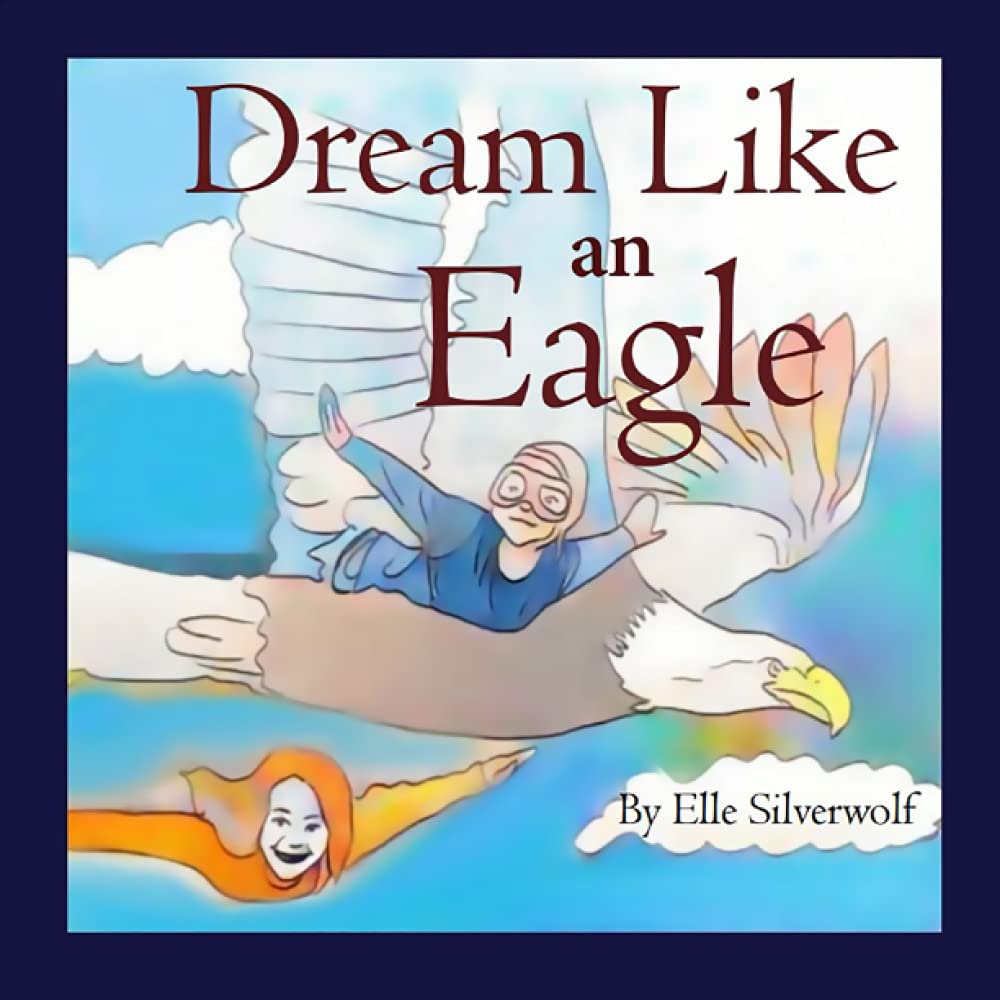
"I just bought the Kindle version for my grandson and am enamored! I love the illustrations...they are very expressive and beautifully done. The concept is wonderful and much needed for our day and age. Great start for a coming series...I can't wait for the rest! My grandson is 5 and learning how to read. The simple text is perfect for him and he loves the illustrations as much as I do! Awesome job!"

— Amazon Customer

Amazon Reviewer

Dream Like An EagleDream Like An Eagle

"Mind and Memory took my rough manuscript and turned it into something I'm genuinely proud of. The editing was thoughtful, the cover design breathtaking, and the team treated my story with real respect."

— Margaret Eldridge

Author, The Hollow Oak

"I love this book and I think it will really do good things for children who read it."

— Amazon Customer

Amazon Reviewer

Dream Like An EagleDream Like An Eagle

"I came in looking for an editor and left with a creative partner. They understood my vision from day one and helped me shape a graphic novel that exceeded everything I imagined."

— Daniel Foster

Illustrator & Graphic Novelist

"The attention to detail is remarkable. Every suggestion felt considered, never imposed. My poetry collection found the home it deserved."

— Priya Nair

Poet, Tides of Silence

Your Cart

(0)

Your cart is empty